
THE SHORT ANSWER
VOOLCO’s stamping, deep-drawing and CNC machining work is carried out by Balford.net. The route connects dedicated tooling, controlled forming, precision machining and dimensional inspection before parts are packed for assembly.
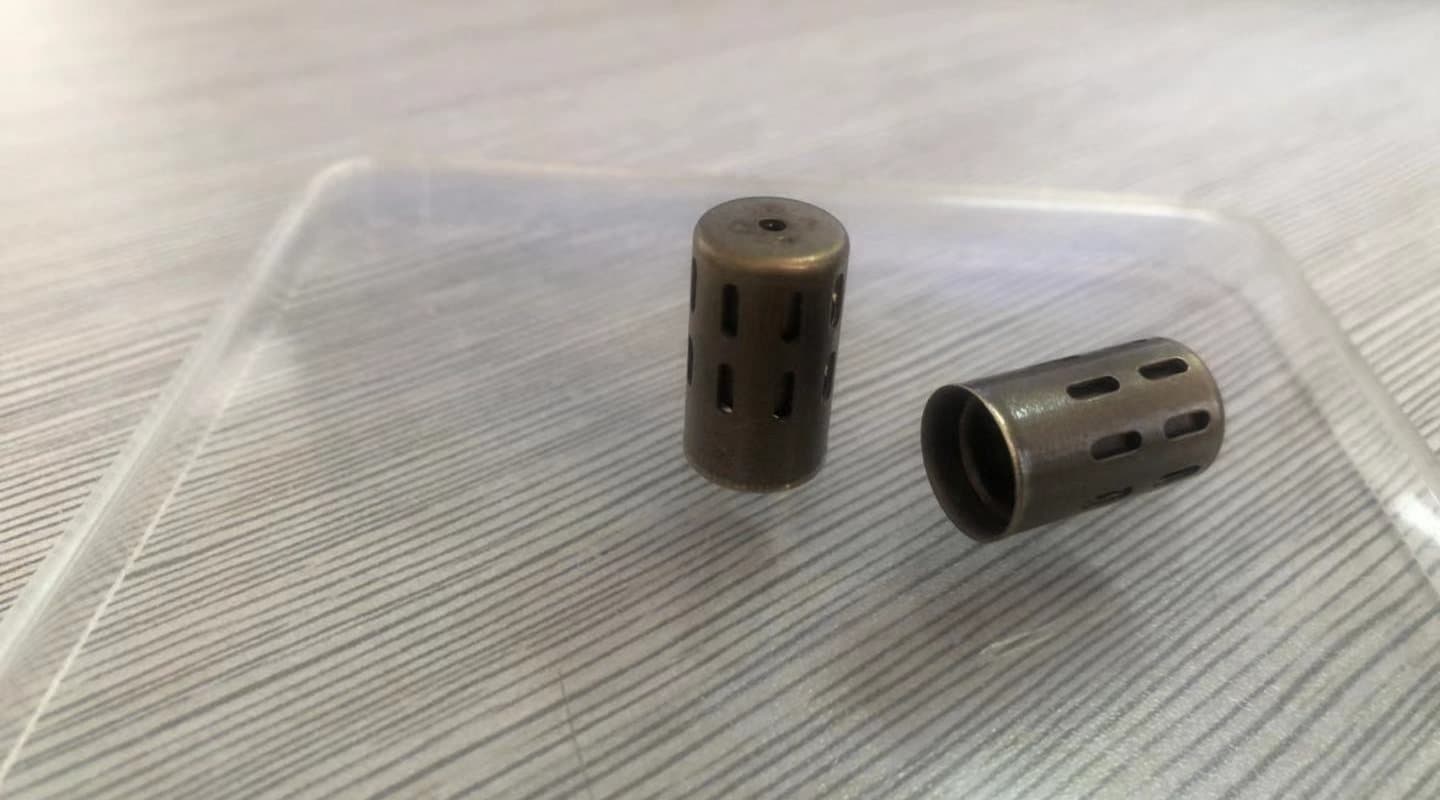
One manufacturing route, three process families
VOOLCO filters are judged by how the housing fits, seals and survives service, not only by the media inside. The metal parts behind the range follow one manufacturing route: strip or sheet is stamped, deep drawn into a shell where the geometry requires it, then CNC machined at the interfaces that locate seals, threads, sensors or mating parts. VOOLCO’s stamping parts, deep-drawn parts and machined parts are produced by Balford.net. Keeping those operations with one manufacturing partner makes drawing revisions, first-article approval and the handover between forming and machining easier to control. For a buyer, the useful question is not simply which process is cheapest. It is which route gives a stable part, a repeatable interface and an inspection record that follows the order.
Stamping: repeatability begins with the tool
Stamping starts with a press, a die and strip or sheet of consistent thickness. A progressive die can blank the outline, pierce holes, form locating features and trim the part in one sequence. The die decides much of the part’s repeatability: clearance, punch and die condition, strip guidance and the way scrap leaves the tool all affect burrs, flatness and hole position. Production checks follow the agreed plan, from the material certificate and first-off approval to dimensional checks at the press and a defined frequency for critical features. On a filter component, a small burr or a shifted hole can interfere with seating or assembly. The answer is not an extra operation at the end; it is a tool and process that hold the feature from the first stroke. Balford.net reviews the drawing, material and intended volume before the stamping route is fixed.
Deep drawing: a shell without a seam
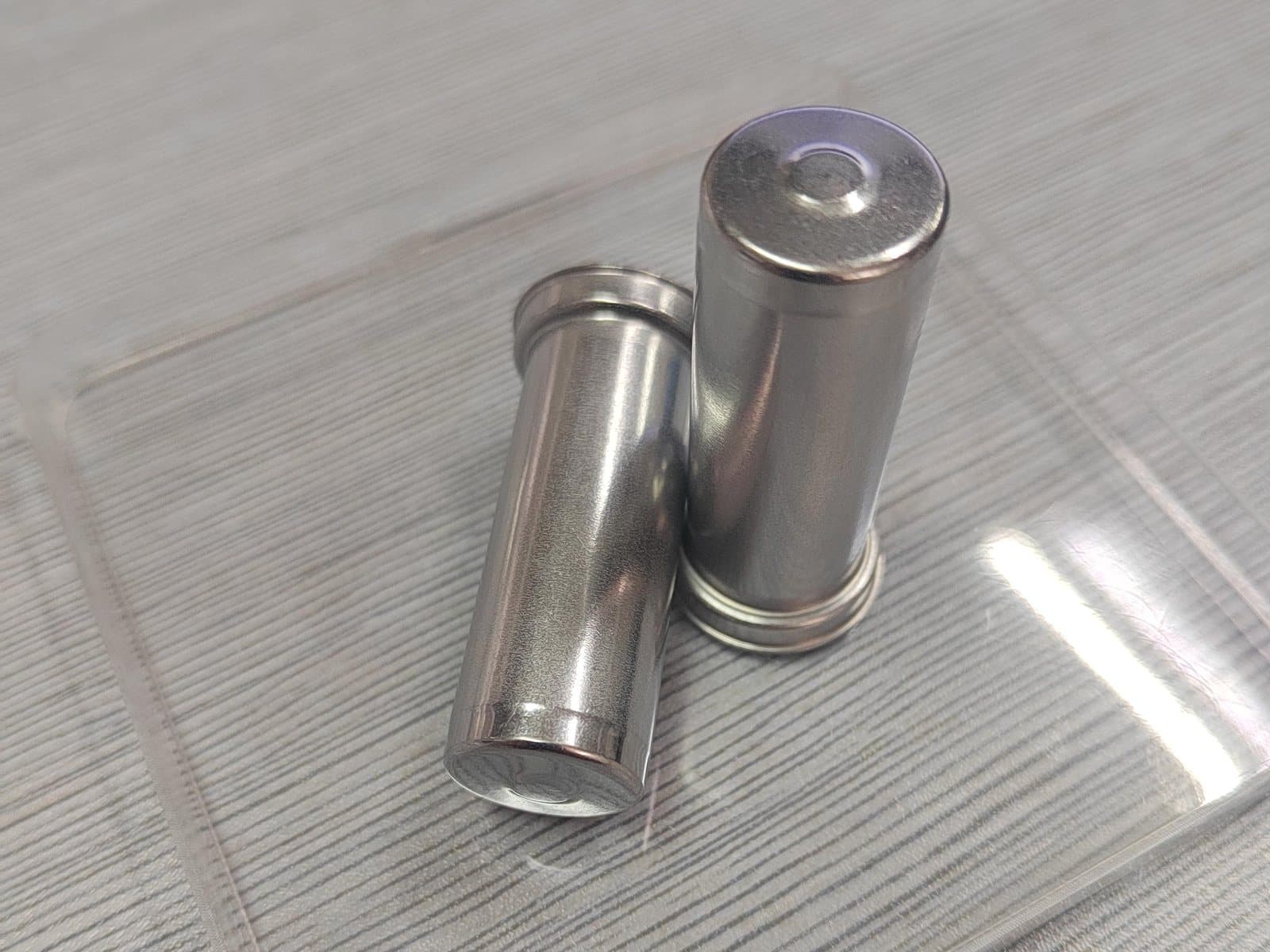
Deep drawing turns a flat blank into a seamless cup or shell. A punch pushes the blank through a die, and the material flows into the wall instead of being folded at a corner. Parts that need a long body, a closed end or a clean internal surface often use this route. The process may need more than one draw, with annealing between stages where the material work-hardens. Trimming, flanging, ironing or piercing follow to establish the final height and interface. Wall thickness, draw radius, lubrication and blank-holder pressure influence tearing, wrinkling and concentricity. These are process variables, not cosmetic details; they decide whether the shell can be machined, sealed or assembled later. Balford.net plans the draw sequence around the part geometry and material, then inspects the critical dimensions before the shell moves to finishing.
CNC machining: the interface is the product
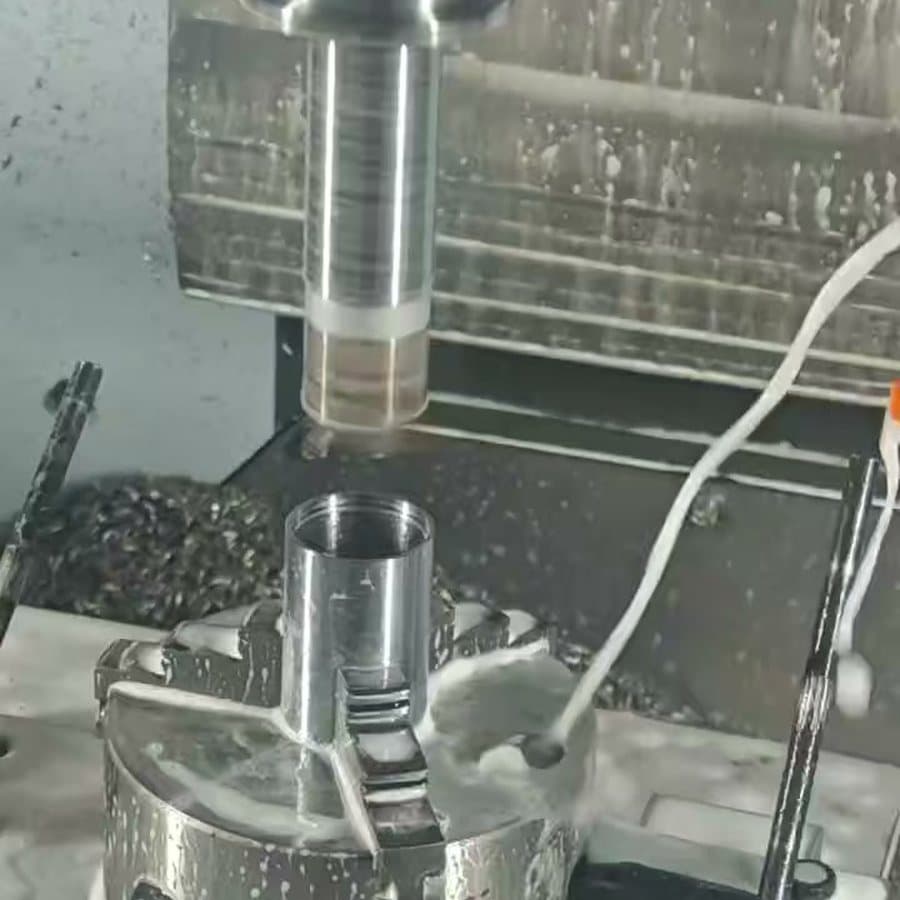
CNC turning and milling become decisive where a part has to connect to something else. A threaded base, a seal groove, a sensor bore, a flat mounting face or a concentric step may need a tolerance and surface finish that forming alone cannot deliver. The machine operation removes material from a stamped or drawn preform, or from bar stock, to establish those interfaces. Setup, tool path, chucking method and in-process gauging matter as much as the machine. A thread that looks correct can still fail if its start, depth or perpendicularity is wrong. A seal seat can leak if the surface finish or radius is inconsistent. Balford.net combines turning, milling and the required secondary operations, then checks the features that define fit and function. The aim is a part that assembles without rework and repeats from batch to batch.
Inspection follows the process
Quality cannot be added after the last operation. The inspection plan should identify the material, the first article, the in-process checks and the final dimensions that matter. Depending on the part, that can include a material certificate, a CMM program, go/no-go gauges, thread gauges, a surface-finish check, a leak test or a visual standard for burrs and handling damage. Records should connect the finished batch to the material lot, the tool or program revision and the inspection result. When a drawing changes, the tool, program and inspection plan need to change together. This matters even more when stamping, deep drawing and machining are combined: a small change at the press can move a datum that the machining fixture depends on. Balford.net keeps the process route and inspection record aligned, so the next order starts from the approved state rather than from memory.
One partner for the full metal route
Using one manufacturing partner for stamping, deep drawing and machining reduces the gaps that appear when a part moves between suppliers. The tool designer, press operator, machinist and inspector can work from the same drawing and the same critical-feature list. A problem at the draw stage can be discussed before it becomes a machining problem; a machining allowance can be checked against the actual formed shell. VOOLCO’s metal components are produced by Balford.net, and the manufacturing route is available for discussion around the product requirement. Buyers can ask for the process route, inspection plan and change-control method before approving a sample. That conversation is more useful than a price alone. Visit Balford.net to review the manufacturing capabilities behind VOOLCO’s stamped, deep-drawn and machined parts.
MAKE THE NEXT STEP USEFUL
Bring these details.
- Current part drawing and revision
- Material, thickness and surface requirement
- Critical threads, seal faces and sensor interfaces
- Estimated annual volume and batch size
- Inspection plan and required records
CONTINUE WITH THE PRODUCT
Turn the question into a product brief.
Explore the relevant range, then confirm the exact model, interfaces and application.
Prepared for professional sourcing conversations. Use exact equipment and filter instructions for selection and service. Model-specific fitment, performance and supply specifications require confirmation.